Live Mode Systems Guide
Paralives Personality Traits Guide: Vibes, Perks, Talents and Leveling
Paralives personality traits are more than a character-creator label. This guide connects Vibes, Social Perks, Talents, Lifestyle choices, daily wants and personality upgrades so you can build a Parafolk whose routine matches the story you want to play.
Quick answer
What do Paralives personality traits do?
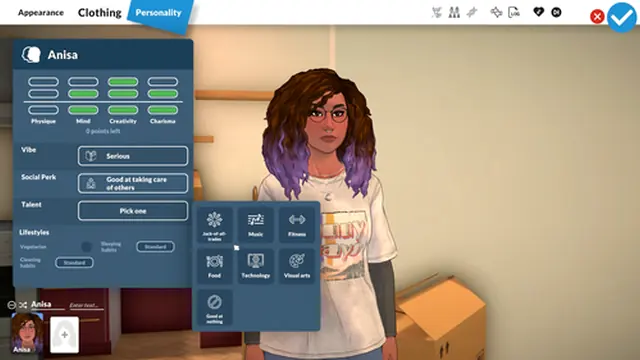
Paralives personality traits shape how a Parafolk handles ordinary life. In the current workflow you choose a Vibe, distribute personality points, and select a Social Perk, Talent and Lifestyle. These choices can influence emotions, needs, wants, interactions and the routine that feels natural for the character.
A Vibe is the broad emotional identity other Paras notice. A Social Perk changes how a character benefits from or reacts to social situations. A Talent points toward learning and work, while Lifestyle choices define habits that make a household distinct. The categories work together, so start with a daily story rather than isolated bonuses.
Personality continues after character creation. Daily wants and longer life goals can award Personality Experience Points, then a level-up presents improvements tied to an aura, Social Perk or Talent. Pick the option that supports the schedule and test it in normal live-mode play.
Paralives Vibes: Five Personality Starting Points
The Vibe list is the clearest first decision in the personality tab. These summaries reflect the inspected early-access guide; treat exact labels and effects as version-sensitive.
An Overjoyed Para shares positive emotion. The Happiness Aura can lift nearby Paras, which helps in busy households and friendly scenes.
Good fit: a host, mentor or family organizer who spends the day around others.
A Gloomy Para is comfortable with sadness and can gain a bonus while sad. That creates a strong story identity, but may clash with a constantly cheerful home.
Good fit: a reflective artist or storyteller whose goals allow solitude.
Energetic Paras carry extra energy for productive actions, recovery or a power nap. Filling the surplus can add stress, so the trait rewards active scheduling.
Good fit: a student, athlete or worker with several useful actions each day.
A Serious Para can enter an In the Zone state on a task they care about. The focused period can make a planned work block more reliable.
Good fit: a maker, researcher or career-focused Para with a clear project routine.
A Jester Para gets playful conversation options and can frame introductions or flirting as a joke. The vibe is social without requiring everyone to match it.
Good fit: a performer, prankster or outgoing friend who values conversation.
Vibes are not a permanent verdict on a character. Needs, relationships, skills and later upgrades can change the way a Para feels in play, so choose a direction that gives you interesting decisions instead of trying to make every category perfect.

How to Level Personality Traits in Paralives
Personality progression follows a simple life-sim loop: set a goal, complete ordinary actions, and spend the reward on one improvement. The inspected walkthrough describes Personality Experience Points from daily wants and completed life goals. It reports an early threshold of 30 points for the first level, but recheck that number after patches.
Wants are short-term wishes that can reset at day end unless pinned. Life goals take longer and give the household a theme. You do not need to grind one action; choose wants that already fit the Para's job, relationships or favorite activities and let experience arrive through normal play.
- Read the current wants Open the reaction cards and pick wishes that fit the routine. Pin a useful long-term want when you need more time.
- Complete goals Finish the requested activity before reset and keep a longer goal moving across sessions. Social, skill and work actions can all count.
- Watch for level up When the pool reaches its threshold, compare the offered improvements with the next few in-game days before choosing.
- Choose one upgrade Open the profile controls and select the aura, Social Perk or Talent improvement that solves the biggest household problem.
- Test the behavior Play through a normal morning, work block or social event and adjust the schedule if the new trait changes needs or interactions.
What Each Personality Category Changes
Use this as a planning map. It explains each category without promising that future updates will keep the same values or labels.
| Category | What it can change | A useful decision question |
|---|---|---|
| Vibe | Emotional tone, aura effects and special conversations. | What should others notice first? |
| Personality points | The starting direction of the profile. | Which qualities should be clear before the first job? |
| Social Perk | Benefits, needs or interaction patterns around company and privacy. | Does this Para recharge through people, solitude or helping? |
| Talent | A learning direction that supports skills and later upgrades. | Which skill should make the day easier? |
| Lifestyle | Habits that give the household a repeatable rhythm. | What routine should survive a busy week? |
Three Practical Personality Builds
These examples connect a trait choice to a home, schedule and relationship goal; they are not locked meta builds.
Setup: two roommates, frequent visitors and a relationship goal.
Choice: Overjoyed plus a social perk that rewards time with other Paras.
Result: conversations and shared meals become progress rather than wasted hours.
Setup: one Para in a skill-heavy career and a compact studio.
Choice: Serious plus a Talent and Lifestyle that protect a work block.
Result: the home, schedule and traits reinforce one productive loop.
Setup: a family household with errands and competing needs.
Choice: Energetic, saving surplus for high-value tasks or a planned nap.
Result: busy windows are manageable without pretending stress and rest do not matter.
A Reliable Personality Workflow for a New Household
Write a one-sentence brief for each Para before polishing appearance details. It turns the creator into a playable plan and makes upgrades easier to judge.
- Start with a role. Write “night-shift caregiver,” “quiet builder,” or another concrete role instead of “good at everything.”
- Choose the pressure. Decide whether time, social energy, money, learning or conflict is the main problem. A trait should answer it.
- Match the home. Give the Para a room, object group or route that makes the personality visible in play.
- Leave one weakness. One need or social mismatch creates decisions. Do not spend every choice on convenience.
- Review after a week. If the trait never changes a decision, try another fit or adjust the schedule.

Personality Traits Troubleshooting
Early Access systems can look inconsistent when a label or save state changes. Check these causes before rebuilding the household.
The option is missing
Read the current profile panel and patch notes. An older video may show another layout or an unavailable feature.
A trait seems inactive
Test the matching situation: social interaction for a perk, a relevant activity for a Talent or focused work for a Vibe.
Progress does not move
Confirm the action satisfies a tracked want or life goal. A normal activity can be fun without awarding points.
An upgrade feels wrong
Keep a copied save, test a full day and compare the new routine with the original goal before restarting.
What Is Confirmed and What Can Change
Steam describes Paralives as Early Access and says the developers plan more content in existing systems, including personality traits, social interactions, skills and town activities. The framework is real, but current labels and effects are not a final 1.0 specification.
The store page says the team expects about two years of Early Access while features are refined. Keep a checked date near the title, link to the official store, and describe community walkthroughs as observations from a particular build.
When a patch changes the profile layout, update the table, examples and FAQ together. Do not preserve an old threshold just because it appears in a search snippet.
Paralives Personality Traits FAQ
What are personality traits in Paralives?
They are the Vibes, Social Perks, Talents, Lifestyle choices and profile selections that shape emotions, needs, interactions and routines.
How many Vibes are in Paralives?
The inspected walkthrough lists Overjoyed, Gloomy, Energetic, Serious and Jester. Treat the list as version-sensitive in Early Access.
Can traits change after character creation?
Personality can develop through experience and level-up choices. Check the current profile controls before promising a full respec.
How do you earn Personality Experience Points?
The community guide describes daily wants and completed long-term life goals as the main sources. Normal activities only count when they satisfy a tracked goal.
What is the best Vibe?
There is no universal best. Match the Vibe to the story: Overjoyed for social scenes, Energetic for busy days, Serious for focused work, Gloomy for reflective stories and Jester for playful interactions.
Do traits affect careers and skills?
They can influence the routine around work and learning when a Talent, Lifestyle or Vibe fits the activity. Confirm exact bonuses in your build.
Is this the Paramaker guide?
No. Paramaker covers the broad creator workflow; this page focuses on personality categories, daily effects, progression and upgrades.
Where can I verify a changed label?
Check the current Steam store, official update posts and the in-game profile panel. Date community guides and treat them as build-specific.